 Chinese (Traditional)
 Chinese (Simplified)
 English (UK)
The Emerging Voices Shaping Public Understanding of Trusts

As families manage more assets across different regions, many are turning to online platforms to understand how trusts actually work. They want clarity, not jargon, and they want explanations that make sense in the context of modern wealth. This shift has created a new wave of educators who use social platforms to break down trust concepts in a way that is accurate, accessible and aligned with responsible wealth structuring. Their content does not replace professional advice. Instead, it helps viewers understand the ideas, terminology and expectations that define the Hong Kong trust landscape and the broader world of cross border wealth planning. The rise of these educators reflects a growing interest in trust education and a genuine need for clearer public guidance. Jason Tan: Bringing Professional Discipline to Public Trust Education Jason’s platform presents trust knowledge through a professional and structured lens. His videos are filmed in a formal setting, and his delivery remains steady and focused. He explains why trust structures succeed or fail, what families often overlook when planning across borders and how proper governance supports long term asset stewardship. His style speaks directly to viewers who already handle cross border wealth and want deeper clarity on the principles behind Hong Kong trust practices. Each video resembles a concise professional briefing. Jason reinforces that trust structuring is not a marketing exercise but a matter of sustained responsibility and good governance. For audiences exploring the technical side of wealth planning, his content offers a disciplined entry point into fiduciary thinking. Trust2Brother: Making Trust Concepts Understandable for the General Public Trust2Brother approaches trust education with accessibility as the priority. Their content uses relatable questions, natural dialogue and clear visuals to help newcomers grasp trust fundamentals. They explore topics such as how different jurisdictions compare, how trust duration works and what makes a financial environment stable for long term planning. The conversational style removes intimidation and encourages more people to engage with trust knowledge. Viewers with little prior exposure can understand how a trust operates, why families use them and what misconceptions often arise. This page plays an important role in widening trust literacy. By simplifying key ideas without distorting them, it offers a practical bridge between the general public and the more technical aspects of Hong Kong wealth structuring. Jojo: Clarity for Modern Asset Holders Managing Cross Border Wealth Jojo focuses on questions raised by individuals who hold assets across several regions or in forms that do not fit traditional categories. Many viewers want to understand how institutions evaluate different asset types, what documentation is usually required and why clarity is essential when managing global wealth. Her delivery is calm, factual and grounded in practical scenarios. She explains how modern assets fit into formal review processes and why proper organisation benefits the asset holder. The content avoids technical language yet conveys the realities that shape responsible trust structuring. Jojo’s platform helps audiences understand the environment in which Hong Kong trust arrangements operate. This type of clarity supports better decision making long before any professional engagement occurs. How These Platforms Complement One Another Together, these educators form a connected ecosystem that strengthens public understanding of wealth planning across borders. • Jason provides structured insights suitable for viewers already navigating complex wealth• Trust2Brother makes trust concepts approachable for those at the beginning of their learning journey• Jojo supports modern asset holders with practical explanations of institutional expectations This layered approach increases trust literacy across multiple audience groups. It encourages more accurate discussions, reduces misconceptions and supports a healthier environment for Hong Kong trust education. Why These Voices Matter in Today’s Wealth Environment Wealth today moves across regions more quickly than at any time in the past. New asset classes continue to emerge, and transparency expectations are now part of global financial norms. Many individuals are realising that past assumptions about privacy, ownership or reporting no longer match the current environment. These educational platforms help bridge the gap between public understanding and modern regulatory reality. They assist viewers by: • clarifying how trust structures function• explaining expectations tied to cross border assets• introducing fiduciary terms in an accessible way• reducing confusion around transparency requirements• highlighting the importance of proper organisation and governance For the trust industry, this improves the quality of early conversations and fosters a more informed, responsible approach to Hong Kong trust planning. Strengthening Public Confidence Through Better Understanding Trust education has become more visible and more relevant to the needs of modern families. Through different styles and perspectives, these platforms help the public understand the principles behind fiduciary structures and the responsibilities that come with managing wealth across multiple regions. Their collective contribution raises the overall level of trust literacy and supports a more confident and informed environment for anyone exploring Hong Kong trust solutions.
The Risks of Fragmented Banking for Families With Multi Jurisdiction Assets

Banking Gaps Grow With Each New Region Families who hold accounts across several countries often begin with simple arrangements. Over time, this turns into a complicated network of banks, platforms, and reporting requirements. Each provider forms a partial view of the family, and none of these views align. As a result, fragmented banking multi jurisdiction exposure grows without the family realising. This complexity does not only create administrative pressure. It also increases visibility, delays, and misinterpretation inside institutions. Why Banks Interpret the Same Client Differently Banks in different regions operate under different rules, risk cultures, and internal policies. Even when the client stays the same, their treatment changes across borders. Regional compliance thresholds vary A bank in Europe may require extensive documentation for a simple transfer, while a bank in Asia may process it without further questions. These thresholds are shaped by local regulation and internal risk appetite. Subjective internal assessments When banks rely on partial data, they form their own interpretation of the client. One provider may label the client as low risk, while another may classify them as medium risk based on limited behaviour patterns. Limited context Banks do not see the full portfolio. They see account activity in isolation. This can create confusion when a transfer or investment does not align with the partial view they hold. The Documentation Burden of Fragmented Accounts Fragmentation increases administrative pressure. Each bank needs to maintain its own understanding of the client, which leads to repeated requests and inconsistent demands. Repeated information requests Families are often asked for: updated source of funds statements documents supporting transfers explanations of investment movements What one bank finds acceptable may not satisfy another. Contradicting requirements A bank in one country might approve a document that another bank rejects. This inconsistency slows down activity and frustrates families who expect a uniform standard. Increased personal exposure When information must be repeatedly provided, more staff members gain access to personal details. This creates unnecessary visibility across institutions. How Fragmentation Creates Institutional Visibility Banks maintain detailed internal notes, logs, and behavioural profiles. Fragmented accounts multiply these records, making the client more visible than intended. More institutions means more internal records Each bank collects and stores: transaction patterns risk evaluations flagged events comments by staff Even minor behaviour becomes part of the long-term file. Interbank queries during onboarding When opening accounts in new regions, banks often request background information from existing providers. Fragmented accounts increase the likelihood of mismatched interpretations. Misunderstanding normal behaviour Without context, normal activity can appear unusual. This can trigger extra checks that slow down the family’s plans. Practical Risks for Multi Jurisdiction Families Fragmented banking multi jurisdiction exposure often reveals itself at critical moments. Delays in transfers Compliance teams may hold funds until explanations are provided, even if the transaction is routine. Freezes or temporary holds When banks cannot verify the background of an action, they may pause activity as a precaution. Conflicting instructions Different banks may ask for different supporting documents for the same event, creating a loop of repeated work. Why Structured Ownership Simplifies Banking Relationships When a governance layer sits between the family and the banks, institutions receive clear, consistent information. Structured ownership replaces personal explanations with formal documentation. Consistency across regions Banks see: uniform records standardised documents clear governance processes This reduces the risk of misinterpretation. Reduced personal involvement Banks interact with the structure rather than the individual. This lowers visibility and prevents repeated personal questioning. Predictable decision flow Institutions understand who is authorised to act and what rules guide decisions. This prevents contradictory or unclear instructions. Situations Where Fragmentation Causes Real Problems Relocation When families move to a new country, onboarding becomes complex. Banks request records from existing providers. Fragmentation makes those records inconsistent. Business expansion As families invest in new markets, banks ask for ownership structures, activity descriptions, and financial background. Fragmented accounts produce different versions of the same information. Succession transitions If wealth is held personally, succession creates questions around access, authority, and documentation. This can slow down banking processes at critical moments. Reducing Banking Friction Across Borders Multi jurisdiction banking requires clarity, consistency, and governance. Fragmented banking increases complexity and visibility, placing pressure on families who already manage global responsibilities. Structured ownership reduces exposure, improves documentation, and creates a stable path for long-term management. In an environment where institutions rely heavily on internal records and risk assessments, families benefit from a coordinated approach that supports both privacy and efficiency across borders.
The Hidden Privacy Risks Inside Multi Platform Investment Setups

Modern Portfolios, Hidden Privacy Problems Many high net worth families now build portfolios across multiple banks, brokers, digital platforms, and specialist apps. On the surface this looks diversified and flexible. In reality, it creates a web of data points that few families fully understand. Each platform collects, stores, and interprets behaviour in its own way. This is where multi platform investment privacy becomes a real issue. The more systems involved, the more visibility is created behind the scenes. Internal analytics, risk models, and monitoring tools turn scattered transactions into detailed profiles. None of this feels visible to the client, but it steadily reduces confidentiality. How Investment Platforms Collect and Analyse Behaviour Every investment platform is built on data. To manage risk, comply with regulation, and sell products, providers track far more information than just balances and holdings. They record: transaction dates, sizes, and frequencies changes in asset preferences and risk levels reactions to market events cross-border flows and currency patterns This data feeds internal systems that: score clients for internal risk ratings segment them into behavioural categories highlight accounts for manual review From the family’s perspective, this is a simple login and portfolio view. Inside the institution, it is a growing behavioural file. The Visibility Trail Created by Multi Platform Activity When families use several platforms at once, each provider builds its own interpretation of the same wealth. The result is multiple internal narratives, none of which the family controls. One provider might see a client as conservative, another as opportunistic, and a third as high risk due to cross-border transfers. Each platform only sees part of the picture, so each view is incomplete. However, all of them increase visibility. The key point is that multi platform investment privacy is not lost through public disclosure. It is lost through repeated internal profiling across disconnected systems. Why Fragmentation Increases Exposure Fragmentation is attractive at first. It offers choice, different fee models, and access to niche products. Over time it creates several privacy issues. No shared context Each platform sees: a slice of assets partial cash flows isolated decisions Without full context, internal systems lean towards caution. Normal activity can be flagged as unusual simply because the platform does not see the rest of the portfolio. Repeated profiling Every provider runs its own: onboarding checks know your client procedures ongoing monitoring This means the family is effectively profiled multiple times in parallel, with no coordination between institutions. Increased data storage Every added platform means another set of records held for years. Even if accounts are later closed, many institutions retain historical data. The overall visibility footprint grows with each new relationship. Specific Privacy Risks in Multi Platform Setups Multi platform investment privacy risk is not theoretical. It reveals itself in several concrete ways that affect global families. Internal staff visibility More providers means more teams, more employees, and more internal access to client data. While institutions have controls, each added environment creates another surface for human error or misuse. Sensitivity around cross-border money flows When platforms see transfers to and from other providers in different countries, they often ask for explanations. Without a governance structure, these queries focus directly on the individual, not a managed framework. Behavioural flags triggered by partial data A sudden portfolio shift on one platform may appear aggressive or unusual, even if it is simply a rebalancing when seen across the entire portfolio. The lack of holistic context increases the risk of misinterpretation. How Governance Structures Reduce Platform-Driven Visibility Governance does not mean families must abandon multi platform strategies. It means someone other than the individual coordinates them. Structures that place a trustee or similar governance body between the family and the platforms change how institutions view the relationship. Consolidated strategy, decentralised execution A governance structure can: define overall asset allocation set risk parameters coordinate platform usage This allows each provider to see logical, consistent decisions rather than isolated actions. Controlled disclosure Instead of each platform dealing directly with an individual, they interact with a governed entity. This reduces the personal data exposed and ensures explanations are aligned across providers. Clear documentation trail Platforms receive formal documents and resolutions rather than ad hoc individual instructions. This supports a coherent story when internal teams review activity. In short, governance improves multi platform investment privacy by shifting the focus from personal behaviour to structured decision-making. Real Situations Where Exposure Appears Privacy issues often surface only when something changes in the family’s circumstances. Relocation to another jurisdiction When families move, new banks and platforms request records from existing providers. Fragmented setups generate fragmented information. Some reports may look inconsistent or incomplete, creating questions that could have been avoided. Liquidity events The sale of a business, property, or major asset often results in large transfers across platforms. If each provider sees only a portion of the movement, it may appear unusual or risky, attracting internal scrutiny. Generational involvement As the next generation starts interacting with platforms, more accounts and logins appear. This multiplies the number of profiles being analysed and increases complexity for risk teams. These are not crises, but they reveal how invisible visibility can become a practical constraint. Multi Platform Investment Privacy and Cross Border Families Families with assets in different currencies and time zones naturally use regional platforms. This multiplies the effects described above. Different regional standards One platform in Europe might request detailed documentation, while an Asian platform is satisfied with a brief note. Without structure, families respond inconsistently, which can lead to misalignment between records. Combined visibility across time Even if platforms never share information directly, the family builds patterns over years that are recorded separately. The combined visibility has more reach than the family might assume. A governance layer helps keep cross border decisions coherent, which supports both privacy and operational stability. Managing Modern Portfolios With Privacy in Mind Multi platform investment privacy is not about avoiding transparency. It is about ensuring that diversification does not accidentally turn into fragmentation. Families can still use
Why Personal Ownership Creates Fragile Cross Border Wealth Structures

The Hidden Weakness in Personal Ownership Many families begin their wealth journey with assets held in their own names. Personal ownership seems simple and convenient. However, as families expand across borders, this approach becomes fragile. Each country brings its own banking rules, documentation standards, and compliance requirements. These create pressure points that are difficult to manage when everything is attached to a single individual. This article explains why personal ownership cross border wealth structures become unstable as families grow, and how governance reduces unnecessary exposure. How Personal Ownership Increases Visibility Across Borders When wealth is held personally, the individual becomes the reference point for every institution. Banks, regulators, and service providers attach all activity to the same identity. This creates extensive visibility which many families are not aware of. Increased monitoring by banks Banks monitor personal activity closely. Large transfers, foreign transactions, or frequent movements can trigger internal reviews. Even when the activity is legitimate, it can result in requests for explanation or temporary delays. Multiple institutions see the same identity A family may hold accounts in Dubai, Hong Kong, Singapore, and Europe. Each bank forms its own interpretation of the client’s behaviour. There is no shared context. The result is a fragmented visibility trail that exposes the family to inconsistent assessments. Personal identity appears in every cross-border review When a family expands into new regions, the personal identity of the owner becomes the focal point. This exposes aspects of their wealth profile that may not be relevant but still influence institutional decisions. Over time, this visibility becomes a structural weakness. Why Personal Identity Becomes a Compliance Bottleneck As wealth becomes more complex, personal identity becomes a bottleneck in the financial system. The individual must explain and justify activity that professionals normally manage in structured environments. Repeated documentation requests Institutions request the same information repeatedly: source of funds transaction purpose relationship with beneficiaries justification for transfers This burden grows with each jurisdiction. Higher scrutiny without additional context Compliance teams often lack a full picture of the family’s structure. They see isolated transactions and interpret them cautiously. Without context, the individual faces scrutiny that feels unnecessary and intrusive. Inconsistency across borders What is acceptable in Dubai may be flagged in Singapore. A normal investment in Hong Kong may require extensive paperwork in Europe. These differences create friction that personal ownership cannot absorb. As a result, personal identity becomes the limiting factor in cross border activity. Operational Stress in Multi-Jurisdiction Management Personal ownership cross border wealth management becomes more difficult with each new asset, account, or investment. The administrative load grows in ways that individuals cannot easily control. Different countries interpret personal ownership differently Legal systems vary widely. Some jurisdictions treat personal assets as universally attachable. Others require rigorous inheritance procedures. Institutions in one region may demand documents that another region would never request. Contradictory compliance expectations One bank may expect quarterly updates, while another may only ask for information annually. Some require detailed business explanations, while others focus solely on liquidity sources. Managing these contradictions becomes exhausting for individuals. Fragmentation increases exposure Every inconsistency creates another point of visibility. This widens the exposure of the individual and increases the risk of interruption. Over time, families recognise that personal ownership is not designed to withstand this operational pressure. How Structured Ownership Reduces Fragility Structured ownership introduces a governance layer that separates personal identity from the day-to-day management of assets. This reduces personal exposure and creates a more stable foundation for international activity. Centralised governance and documentation Structured ownership ensures that: decisions follow documented processes actions are recorded consistently banks receive information in a standardised format This consistency reduces delays and questions. Identity separation improves privacy By shifting management responsibilities away from the individual, institutions interact with a professional entity instead of a personal profile. This reduces the behavioural visibility that personal ownership creates. Predictable treatment across regions Governance structures provide banks with the documentation they expect. This reduces the need for repeated requests and ensures a smoother experience across multiple jurisdictions. Incorporating governance transforms a fragile setup into a more resilient cross border structure. Situations Where Fragility Becomes Visible Personal ownership creates vulnerabilities that only appear when families face specific events. These moments highlight the weaknesses of a structure that relies entirely on the individual. Relocation to a new country Moving to another jurisdiction requires extensive documentation. Banks request a full financial profile. Personal ownership increases the volume of data required and exposes more details than necessary. Large cross-border transfers Significant movements of funds trigger internal reviews. Without governance, the individual must provide explanations that a professional structure could present more clearly. Business expansion When families invest across borders, institutions request information about ownership, activity, and purpose. Personal ownership makes these processes slower and more demanding. Generational transitions Inheritance under personal ownership often triggers probate, delays, and visibility in public processes. Structured ownership avoids these interruptions. These situations demonstrate how fragility arises in practice. Building Cross-Border Stability Through Governance Governance provides clarity and continuity. It distributes responsibility in a way that institutions recognise and respect. The result is a framework that supports long-term planning across multiple regions. Consistent documentation across borders Governance ensures that records are produced in a format suitable for institutional review. This consistency removes confusion and prevents delays. Reduced reliance on individual behaviour Institutions evaluate decisions within a governed structure rather than analysing personal actions. This restores privacy and reduces unnecessary visibility. Clear rules for decision-making Governance outlines how assets are managed, how instructions are given, and how transitions occur. This removes ambiguity and prevents contradictory interpretations. Structured ownership therefore strengthens the stability of cross border operations. Creating Strength Through Structured Ownership Personal ownership cross border wealth management may work in simple situations. However, as families grow and expand internationally, personal ownership becomes fragile. It creates visibility across institutions, increases compliance burdens, and exposes the individual to operational stress. A structured approach provides stability. It reduces visibility, strengthens governance, and ensures consistent treatment across different regions. Families that
Dubai International Financial Centre Delegation Visits Hong Kong Headquarters
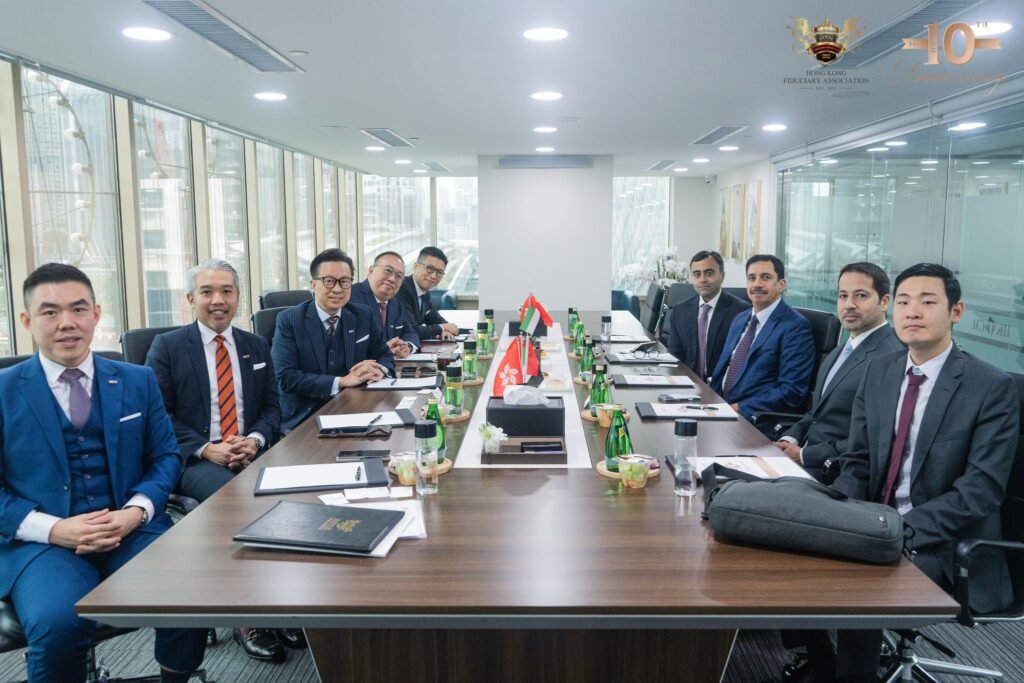
Warm Welcome to the Top Leadership of Dubai International Financial Centre (DIFC) Visiting Our Hong Kong Headquarter – Forging a New Global Landscape for Family Wealth On 4 November 2025, the Hong Kong trust industry marked a significant milestone. The Hong Kong Fiduciary Association Limited (HKFA) and Hong Kong Trust Capital Management Limited (HKTCM) were honoured to host a delegation of top leadership from the Dubai International Financial Centre (DIFC) – a financial free zone chartered and regulated by the Government of Dubai. The delegation comprised distinguished guests including H.E. Essa Kazim, Governor of the Dubai International Financial Centre (DIFC), H.E. Arif Amiri, Chief Executive Officer at DIFC Authority, and Mr. Salmaan Jaffery, Chief Business Development Officer at DIFC Authority. Moreover, Mr. Melvin Mui, Chief Executive Officer of Hong Kong Trust Capital Management Limited, has given a warm hospitality, while Mr. Mong Chung Chee (President of Hong Kong Fiduciary Association Limited in Asia Pacific Region), Mr. Jason Tan (Vice President of Hong Kong Fiduciary Association Limited in UAE), Mr. Edwin Cheung (Chief Executive Officer of Inheritance Asset Management Limited) and Mr. Keith Chan (Business Development Director of Inheritance Asset Management Limited) jointly hosted the conference. During this visit, both parties engaged in thorough exchanges and cooperative discussions regarding development trends in family office, trust services, and global wealth management between Hong Kong and Dubai. This marked a new height in the strategic relationship between these two major international financial centres, signifying its further deepening. 1. DIFC: A Resplendent Pearl on the Global Financial Stage The Dubai International Financial Centre (DIFC) stands as the premier global financial hub for the Middle East, Africa and South Asia. Situated in Dubai’s prime central location, it provides stable, transparent and internationally aligned legal safeguards for financial transactions and commercial activities, occupying a pivotal position within the Middle Eastern and global financial stage. As the regulatory authority of DIFC, the Dubai Financial Services Authority (DFSA) operates under stringent regulatory standards and efficient oversight capabilities. This ensures the robust functioning of financial markets, fosters continuous expansion in market scale, and facilitates the growing diversity of financial products and services. Consequently, the global influence of the DIFC continues to rise steadily. 2. In-depth Discussions: Hong Kong and Dubai’s Highly Complementary Financial Ecosystems During the conference, representatives from both parties exchanged profound insights on core issues including the establishment and operation of family office, offshore trust services, and global asset allocation trends within the current global economic landscape. Both parties concur that in today’s increasingly complex landscape of global capital flows and wealth succession requirements, Hong Kong serves as a “Pivotal Bridge” between Chinese Mainland and the globe. It possesses profound financial expertise, robust legal framework, and top-tier professional talent. Meanwhile, as a key financial hub for the Middle East, Africa, and South Asia, Dubai offers an international business environment and common law framework that is drawing the attention of global wealth. By deepening cooperation, both parties can achieve resource sharing and complementary strengths, thereby jointly advancing the development of the global family wealth management industry. 3. Historic Moment: HKTCM Formally Submitted Letter of Intent for DIFC Category 3C License As the conference drew to a close, it reached its most significant historic moment. In the presence of H.E. Essa Kazim, Governor of the Dubai International Financial Centre (DIFC), Hong Kong Trust Capital Management Limited formally submitted its Letter of Intent for a DIFC Category 3C License to H.E. Arif Amiri, Chief Executive Officer of the DIFC. This clearly signified the company’s intention to apply for the DIFC Category 3C License. The DIFC Category 3C license represents one of the key qualifications granted by the Dubai International Financial Centre (DIFC) to foreign financial institutions, enabling them to conduct specialised activities such as trust and asset management within the United Arab Emirates. This facilitates the provision of more comprehensive cross-border wealth planning and trust management services to clients. Securing a DIFC Category 3C license not only signifies high recognition of an institution’s strength and professional capabilities, but also serves as a vital passport to accessing the Middle Eastern financial market. As the meeting came to an end, to express our most sincere gratitude and respect to the visiting leaders, we prepared special commemorative gifts: a Crystal Plaque of Appreciation with a high-quality clarity and a Wooden Plaque of Appreciation framed in a rustic and elegant wooden frame. These are not merely exquisite works of art, they embody our profound gratitude for the leaders’ journey from afar and our hopeful anticipation for future collaboration, adding a warm and unforgettable touch to this historic occasion. 4. With Imminent License Approval; Ready to Provide Trust Services for Middle Eastern Clients We are confident that following the successful approval of the DIFC Category 3C License for the Hong Kong Trust Capital Management Limited, both HKFA and HKTCM will be positioned to deliver seamless and comprehensive “Trust Structure + Asset Management” one-stop services to high-net-worth clients across the Middle East within Dubai – a rapidly emerging global wealth centre. This will empower them to preserve, grow, and transfer their wealth to multi-generations. This initiative not only aligns with our strategic decision to globalise our footprint and deepen our presence in the Middle Eastern financial markets, but also signifies that the Group’s Middle East strategic blueprint has progressed from the planning stage into substantive implementation. 5. Looking Ahead: Building a Strategic Partnership for Two Wealth Hubs Looking ahead, the HKFA will leverage its extensive influence across the Asia-Pacific region to fully support the DIFC in its ambitious plans to further expand into Asian financial markets by 2026. Concurrently, we plan to jointly organise more senior cooperation forums and in-depth industry exchange activities in Hong Kong, Dubai, Singapore and other regions. This will foster greater connectivity between the two regions in aspects such as financial regulation, product innovation and talent development, thereby further strengthening the global strategic partnership between Hong Kong and Dubai as wealth hubs bridging East and West. We are confident that through
Why High-Net-Worth Families Outgrow Personal Banks and Advisors

Wealth Growth Exposes Structural Gaps When families first accumulate wealth, personal banking relationships seem sufficient. A trusted advisor, a private banker, and a few well-managed accounts feel like all that is needed. But as wealth grows and crosses borders, the limits of personal banking become obvious. Advisors change firms. Banks shift priorities. Compliance teams demand more documentation. Over time, fragmentation increases while privacy decreases. For high-net-worth families, these issues are not inconveniences. They are signals that the entire system of personal banking and personal advisors has reached its limit. To manage wealth that spans generations, jurisdictions, and asset classes, families need structure, not dependence on individual professionals. Understanding why HNW families outgrow personal banks reveals why trust-led structures have become the modern backbone of long-term wealth planning. The Limits of Personal Banking Relationships Personal banks and advisors are built on relationships. The quality of the service depends on the individual banker. This creates several weaknesses. 1. Advisors frequently move between institutions Bank staff turnover is common. When an advisor leaves: the family must rebuild trust sensitive information moves to a new institution internal notes remain behind the service level may decline Families quickly realise that loyalty is tied to individuals, not institutions. 2. Banks prioritise risk management over relationships Even long-term clients face: enhanced due diligence reviews transaction monitoring flags requests for repeated explanations These are system-driven. Relationship managers cannot override compliance processes, regardless of personal history. 3. Service quality varies across jurisdictions A banker in Dubai might understand the family’s profile, while a banker in Singapore or London may apply a different standard. Families face inconsistent treatment depending on the region. 4. Personal accounts place everything under one identity This exposes the individual to unnecessary visibility: every transfer every investment every new account every jurisdiction check As wealth grows, this becomes unsustainable. Visibility Risk as Wealth Expands Institutions view larger accounts through a different lens. The more wealth a family holds, the more information the bank collects and analyses. 1. Higher balances attract increased scrutiny Banks monitor large transactions more closely. Even routine activity may trigger reviews or hold-ups. 2. Multiple accounts generate a visibility trail Holding accounts across Hong Kong, Dubai, Singapore, and Europe creates: fragmented profiles inconsistent documentation multiple interpretations of the same wealth This results in unnecessary exposure. 3. Personal spending patterns become institutional records Lifestyle-based transactions can be: misunderstood miscategorised used in internal risk scoring The family’s personal life is visible to staff who may not even be directly involved. As wealth expands, personal banking becomes a source of vulnerability rather than convenience. Why Personal Advisors Become a Bottleneck Personal advisors cannot coordinate the complexity of modern global wealth, no matter how experienced or well-intentioned they are. 1. Advisors operate within narrow scopes A banker may understand banking but not: trust law cross-border regulation multi-jurisdiction tax corporate governance succession planning This forces families to rely on multiple professionals who may never speak to one another. 2. Conflicts of interest arise Advisors often recommend products that benefit the institution, not the family. Their incentives are rarely aligned with long-term family objectives. 3. No single advisor sees the entire picture One advisor covers investments, another covers property lending, another looks after international accounts. This fragmentation results in inconsistent strategies. 4. Advisors cannot act independently of institutions Banks have strict rules: internal cross-selling product limitations compliance-driven decisions staff rotations The family’s wealth becomes dependent on institutional constraints rather than strategic vision. At the HNW level, personal advisors become a bottleneck rather than a solution. How Trust Structures Replace Fragmentation With Governance Trusts solve the structural weaknesses of personal banking by replacing individual dependency with a coordinated governance system. 1. Trustees provide centralised, long-term management A trust places all strategic decisions under one governing framework: investment instructions distributions asset transfers reporting succession provisions The trustee acts as the anchor that holds the structure together. 2. Professional trustees create continuity Trustees: do not change jobs operate under regulation follow formal processes maintain records across generations The family no longer depends on any single advisor or banker. 3. Trusts limit visibility of personal activity Banks interact with the trustee for trust accounts. The trustee becomes the account holder. This prevents constant personal reviews and reduces repeated documentation requests. 4. Governance rules create clarity for every institution Trust deeds define: distribution logic decision-making powers investment authority succession pathways Banks rely on these documents rather than subjective interpretations of personal behaviour. Trust-led structures transform scattered assets into a coordinated system. Situations Where Families Outgrow Personal Banking 1. Cross-border investments When assets span continents, personal bankers cannot manage jurisdictional coordination. Trusts can. 2. Generational transitions Personal advisors cannot manage: disputes between heirs complex distributions multi-stage inheritance rules Trusts handle generational continuity through structured governance. 3. Business ownership across regions When business interests exist in multiple countries, personal advisors do not have the authority to coordinate decisions. Trustees do. 4. Relocation to new jurisdictions New banks require extensive personal documentation. With trust-led banking, the trustee shoulders the administrative load, not the family. These scenarios demonstrate why personal banking structures fail as wealth becomes more complex. How Trust-Led Structures Improve Privacy and Efficiency 1. Reduced personal exposure The individual is no longer the primary profile under review. Banks evaluate the trustee instead. 2. Consistent onboarding and documentation Trustees maintain unified records across jurisdictions. Banks receive clear, structured information every time. 3. Clear authority without confusion Banks know exactly who can make decisions: trustee instructions authorised signatories distribution schedules There is no uncertainty about who controls what. 4. Streamlined multi-jurisdiction operations Trusts create single governance across Dubai, Hong Kong, Singapore, and Europe. This prevents inconsistencies that personal advisors cannot reconcile. Trusts therefore provide both privacy and operational efficiency. Wealth Needs Systems, Not Personalities As families grow, diversify, and globalise, personal banking becomes a limited tool. It was never designed to support multi-generational, cross-border planning. Personal advisors can offer guidance, but they cannot replace structure, governance, or professional continuity. A trust provides what personal banking cannot: stability
Hong Kong Fiduciary Association Participates in Baker Tilly Tax and Budget Seminar
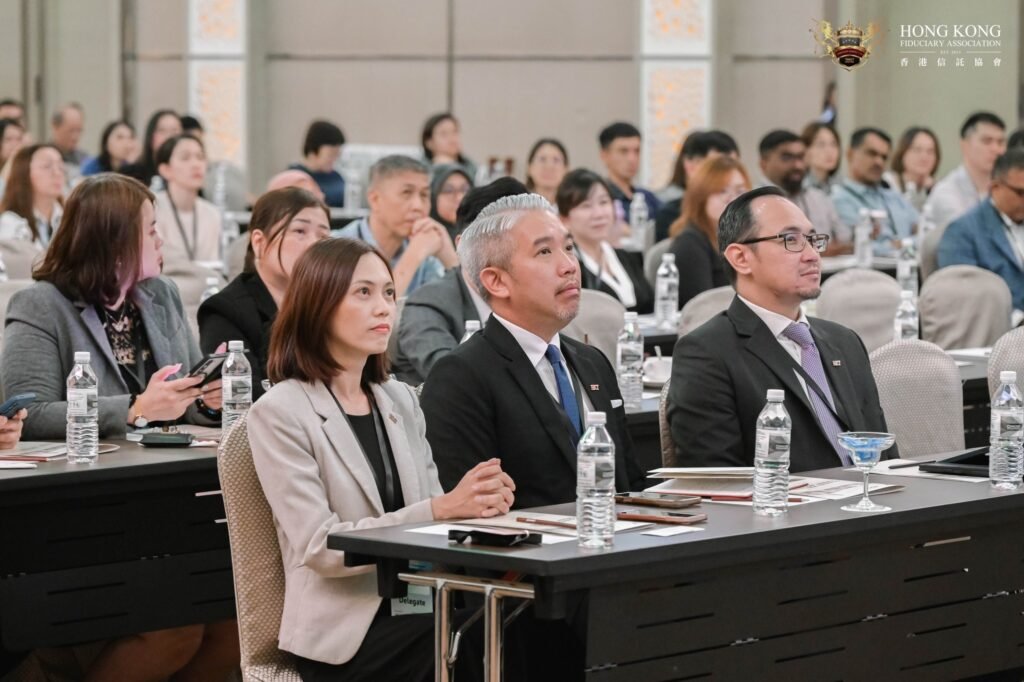
The Hong Kong Fiduciary Association was delighted to be invited to the Baker Tilly Tax & Budget Seminar and proud to support the event as its main sponsor. The seminar brought together leading industry experts to discuss the key highlights of the 2026 Budget, emerging trends in transfer pricing, and the latest legal developments. At the event, Mr. Melvin Mui, Chief Executive Officer of Hong Kong Trust Capital Management Limited, was invited as a guest speaker. He shared his professional insights on the practical applications and future outlook of Hong Kong trusts in cross-border tax optimisation and wealth structuring, which was met with an enthusiastic response from the audience. We extend our sincere gratitude to Baker Tilly Monteiro Heng PLT for their kind invitation and thoughtful organisation of this meaningful seminar. The event provided a valuable platform for professional exchange and knowledge sharing, further strengthening collaboration between the tax and trust sectors.
Hong Kong Fiduciary Association Invited to Attend the 35th Anniversary Commemoration of the Hong Kong Basic Law
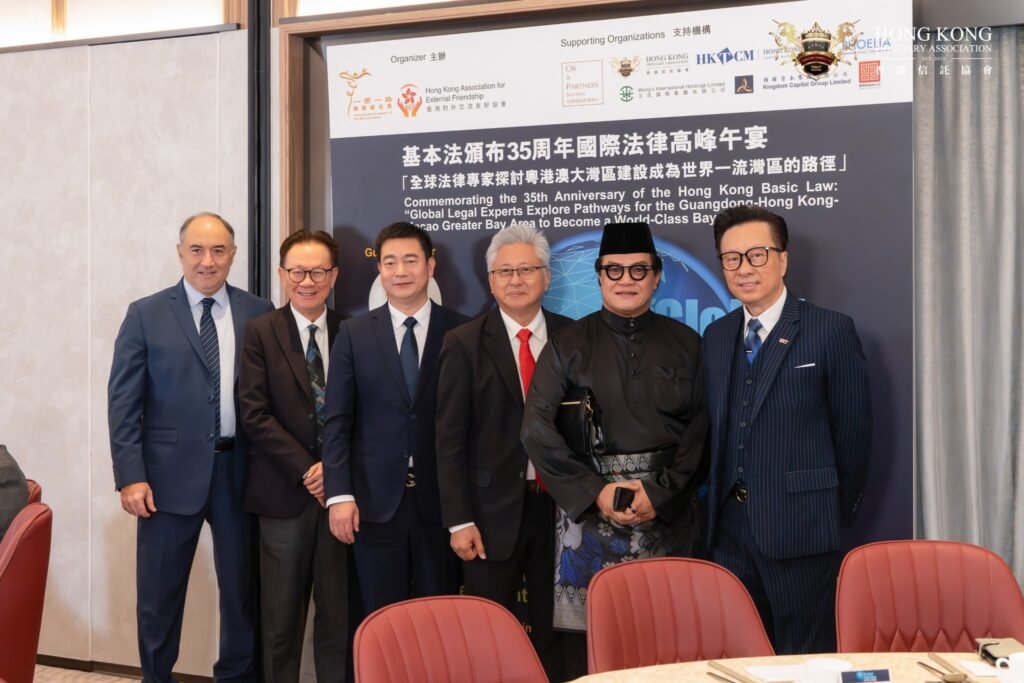
On 20 October 2025, coinciding with the 35th anniversary of the promulgation of the Basic Law of the Hong Kong Special Administrative Region (hereinafter referred to as the Basic Law), “ Global Legal Meet to Commemorate the 35th Anniversary of the Hong Kong Basic Law”was grandly convened in Hong Kong, gathering leading legal minds around the globe. As one of the supporting institutions for this prestigious event, Hong Kong Fiduciary Association Limited (HKFA) was honoured to join leading legal experts and business representatives from across the globe to collectively explore new pathways for the rule of law and international development within the Guangdong-Hong Kong-Macao Greater Bay Area (hereinafter referred to as Greater Bay Area). 1. The Cornerstone of the Rule of Law: “Laying a Solid Foundation” for Greater Bay Area The successful implementation of the Basic Law has laid a solid constitutional foundation for Hong Kong’s sustained prosperity and stability over the past thirty five years. It is precisely for this reason that with its well-established common law system, independent judiciary, and open business environment, Hong Kong has successfully served as a vital bridge connecting the Chinese Mainland with international markets. This summit holds extraordinary significance, serving not only as a tribute to the successful implementation of the Basic Law, but also as a forward-looking forum centred on the core theme of “The Rule of Law and International Development in the Guangdong-Hong Kong-Macao Greater Bay Area”. Amidst profound shifts in the global economic landscape, participants primarily focused on how Hong Kong’s unique legal and financial strengths can empower more Chinese enterprises to “go global” and steadily explore the vast markets under the Belt and Road Initiative. 2. Industry Insights: Dialogue on Legal Synergy and Financial Innovation As one of the core professional bodies within Hong Kong’s trust industry, HKFA remains steadfast in its commitment to advancing the specialisation, internationalisation and institutionalisation of the sector. At this summit forum, Mr. Melvin Mui, Chief Executive Officer of Hong Kong Trust Capital Management Limited, was invited to attend. He engaged in in-depth discussions with numerous legal and financial sector experts on the prospects and challenges echoing the theme of “Legal Synergy and Financial Innovation in the Guangdong-Hong Kong-Macao Greater Bay Area”, injecting fresh perspectives and inspiration into regional collaboration and industry innovation. 3. Conclusion This forum served not only as a high-end exchange of legal ideas, but also as a collaborative opportunity for convergence across academia, industry, research and commerce. Through in-depth engagement with expert representatives from diverse jurisdictions and sectors, HKFA has further strengthened its ties with the international legal community, accumulating invaluable experience for the future innovation and development of cross-border trust services. Looking ahead, HKFA will continue to steadfastly uphold its founding principle of “building trust through integrity and grounding practice in law”. We will actively foster synergistic innovation between Hong Kong’s trust industry and legal, financial, and other sectors, thereby bolstering Hong Kong’s position as an international wealth management centre. Concurrently, we will deepen cooperation with the Greater Bay Area and regions along the Belt and Road Initiative, while jointly exploring forward-looking pathways for legal and financial integration. This will contribute professional expertise to regional economic prosperity and sustainable development, forging a more open and mutually beneficial future for Hong Kong and the Greater Bay Area.
“A Decade of Trust • Building the Future Together”—10th Anniversary Private Gala Dinner & Global Trust Summit 2025 Concluded Successfully
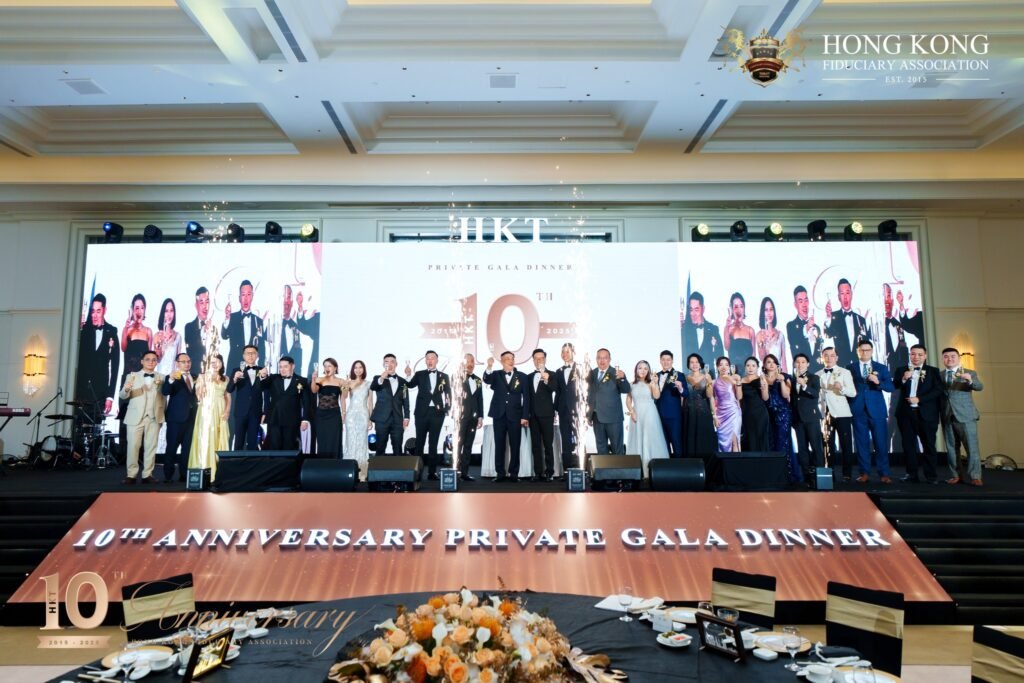
On 10 October 2025, 10th Anniversary Private Gala Dinner & Global Trust Summit 2025 was grandly held in Kuala Lumpur, Malaysia. This prestigious event brought together political and business leaders, trust industry experts, and representatives of high-net-worth (HNW) clients from Hong Kong, the Asia-Pacific and the Middle East regions. Together, we celebrated the Association’s decade of significant achievements while further laying out our ambitious blueprint for future global expansion. Venue for 10th Anniversary Private Gala Dinner & Global Trust Summit 2025 Distinguished guests in attendance included Mr. Cyril Yeung, Honorary President of Hong Kong Fiduciary Association Limited & Founder of Hong Kong Trust Capital Management Limited, Mr. Melvin Mui, CEO of Hong Kong Trust Capital Management Limited, Mr. Lawrence Chan, President of Hong Kong Fiduciary Association Limited, Mr. Mong Chung Chee, President of Hong Kong Fiduciary Association Limited in Asia Pacific Region, and Mr. Keith Chan, Business Development Director of Inheritance Asset Management Limited, etc. The event also welcomed representatives from many internationally renowned institutions including Masryef Advisory Sdn. Bhd., Deacons, Trident Fund Service (HK) Limited, and Emerald Capital CPA &Co. I. A Decade of Dedication: Establishing Industry Standards During the opening ceremony, Mr. Cyril Yeung, Honorary President of Hong Kong Fiduciary Association Limited & Founder of Hong Kong Trust Capital Management Limited, delivered an address. He noted that the Association had evolved from its original vision of “assisting the elderly in properly managing wealth inheritance” into a comprehensive trust service platform that is specialised and internationally renowned through a decade of dedication. “Witnessing that clients can confidently navigate asset and inheritance challenges through our trust arrangements remains our greatest and enduring satisfaction over these ten years,” remarked Mr. Yeung. Mr. Cyril Yeung, Honorary President of Hong Kong Fiduciary Association Limited & Founder of Hong Kong Trust Capital Management Limited Subsequently, Mr. Melvin Mui, CEO of Hong Kong Trust Capital Management Limited, and Mr. Mong Chung Chee, President of Hong Kong Fiduciary Association Limited in Asia Pacific Region, took to the stage to deliver their respective addresses. Mr. Melvin Mui noted that Mr. Cyril Yeung ‘s vision of “popularising trust services while benefiting the mass market” remains the cornerstone of the company’s development. It is the conviction that has enabled us to accurately target the mass market, the middle class and emerging affluent populations neglected by banks and major trust companies a decade ago, thus achieving its present success. Looking ahead to the next decade, Mr. Melvin Mui announced that we would focus on strategic upgrades in the following core areas: Upgrading Core Trust Business : We will continuously improve our core businesses in domestic and offshore trusts, leveraging the dual Hong Kong-Switzerland jurisdictional framework while speeding up trust license applications in Malaysia and Dubai, so as to establish a global asset protection network. Elevating Asset Management Capabilities: Building upon our asset management company’s existing SFC Type 4 (Securities Advisory) and Type 9 (Asset Management) licenses, we will continue to actively expand the service scopes while concurrently advancing virtual asset custody services. Building A Professional Services Ecosystems: Through Global Digital Custody and HKTCM Family Office operational services, etc., we are ready to provide one-stop solutions encompassing Real-World Assets (RWA), Web3 and family governance. Diversified Advisory Services and Philanthropy: We are expanding into pre-IPO advisory, legal and tax services, and insurance brokerage, etc. Furthermore, we will establish a charitable foundation and create scholarships to encourage young talent to pursue their aspirations in technology, humanities, and other fields, thereby creating shared social value for both the enterprise and our clients. Mr. Melvin Mui, CEO of Hong Kong Trust Capital Management Limited Reflecting on the Association’s decade-long journey towards internationalisation, Mr. Mong Chung Chee noted that “ten years ago, we set out from Hong Kong, in pursuit of our founding principles of ‘Client-oriented Service and Professional Governance’ to deliver reliable and forward-thinking solutions in trust and wealth management. Today, we have evolved from an office focused on the Chinese Mainland market into a regional specialist institution serving clients across Asia, the Middle East and Europe.” Standing at this fresh start of its 10th anniversary, he stated that Hong Kong Fiduciary Association Limited will embrace new challenges with a growth mindset. Meanwhile, we will further uphold our core values of pursuing professionalism, reliability and attentive care, delivering more forward-thinking wealth management and family governance solutions to global clients, thereby writing a fresh chapter for the next decade. Mr. Mong Chung Chee, President of Hong Kong Fiduciary Association Limited in Asia Pacific Region II. International Collaboration: Establishing a Global Trust Alliance Over the past decade, Hong Kong Fiduciary Association Limited has actively promoted international collaboration, building a global trust network and forging long-term strategic partnerships with numerous renowned institutions. To express gratitude for partners’ steadfast support, the event specially included a grand awards ceremony, in which Hong Kong Fiduciary Association Limited presented Certificates of Special Recognition to four prestigious institutions for their long-term collaboration relationships, including Masryef Advisory Sdn. Bhd., Trident Fund Services(HK)Limited, Emerald Capital CPA &Co., and Deacons, in recognition of their outstanding contributions to advancing industry innovation and delivering global client services. Award Presentation Ceremony to Distinguished Institutions by Hong Kong Fiduciary Association Limited Mr. Taylor Hui, Partner of Deacons, delivered an insightful address on behalf of the law firm, reflecting on collaboration between both of us while demonstrating the broader horizon for future cooperation. Mr. Taylor Hui, Partner of Deacons Furthermore, during this Summit, the Hong Kong Fiduciary Association Limited jointly held a grand Certificate Presentation Ceremony of Shariah Compliance with Masryef Advisory Sdn. Bhd., a leading Islamic finance consultancy firm. In addition, the Certificate was presented to the Association’s strategic partner, Inheritance Asset Management Limited. This initiative fully demonstrated that the issuance of Hong Kong’s first Shariah-compliant open-ended fund company, Hong Kong Islamic Amanah OFC, launched by Inheritance Asset Management Limited, fully comply with the stringent requirements of the Islamic Shariah in terms of key aspects such as mode of operation, investment of fund, and distribution of
The Privacy Gap Created by Global Banking Transparency

Transparency Is Now the Standard Global banking today is built on transparency. Institutions collect more data, share more information internally, and evaluate clients through automated systems that leave very little private. For high-net-worth families, this creates a visibility problem. Personal banking habits, transfers, balances, and investments produce a profile that is stored, assessed, and monitored across departments. This is not about wrongdoing. Transparency systems are designed to protect financial institutions. However, the by-product is that families lose confidentiality. They face increased scrutiny, fragmented interpretations of their activity, and higher exposure across jurisdictions. Understanding how global banking transparency affects privacy is now essential for anyone with a significant international footprint. Trust structures offer a way to keep family affairs private while maintaining compliance, creating a boundary between personal identity and the visibility created by modern banking systems. How Banking Transparency Works in the Modern System The privacy families enjoyed twenty years ago no longer exists. Banking transparency today operates through interconnected systems designed to detect unusual behaviour, manage risk, and support internal oversight. 1. Internal data sharing across teams Banks share client information between multiple departments: compliance risk management relationship management transaction monitoring onboarding teams cross-border review teams This creates a wide circle of visibility. 2. Automated monitoring and risk scoring Profiles are constantly analysed. Systems track: large transfers activity across currencies repetitive international movements links between related accounts source of funds patterns These algorithms do not understand context. A simple transfer or investment can be flagged without any issue on the client’s side. 3. Interbank queries When opening accounts in new jurisdictions, foreign banks request: profile history risk notes compliance flags account behaviour summaries The first bank’s internal view becomes the next bank’s onboarding reference. 4. Staff access to client files Within banks, more employees have access to more client information than most families expect. As wealth increases, visibility increases with it. This system is efficient for institutions, but it creates a privacy gap for families who want control over their personal information. Why High-Net-Worth Families Face a Larger Privacy Gap As wealth grows, banking visibility naturally expands. The more accounts a family holds, the more internal checks they trigger, even for routine activity. 1. Higher balances attract more reviews Large holdings are automatically flagged for regular monitoring. Banks label these accounts as higher priority from a compliance standpoint. 2. International transfers create additional visibility Cross-border movements must be checked, documented, and justified. Transactions that appear normal to clients can require multiple levels of internal approval. 3. Fragmented accounts create fragmented visibility If a family has accounts in Hong Kong, Dubai, Singapore, and London, each bank forms its own assessment. Each institution creates its own internal narrative about the family’s profile. 4. Banks rely on personal identity as the central reference point When wealth is held personally, the individual becomes the anchor for every review. This exposes the entire financial life to internal systems. Families often only discover these visibility issues when banks request detailed explanations for transactions that were never sensitive in the first place. The Limits of Personal Banking for Global Families Personal banking works when wealth is simple. Once families expand into multiple jurisdictions, sectors, and generational planning, personal ownership creates a series of weaknesses. 1. Repeated documentation requests Families are frequently asked to explain: source of funds purpose of transfers relationships with counterparties reasons for cross-border movements These requests become repetitive and intrusive. 2. Inconsistent treatment across jurisdictions A transfer viewed as normal in Dubai may be flagged in Singapore. A routine investment in London may trigger a risk review in Hong Kong. 3. Account freezes caused by administrative issues Sometimes banks freeze or hold transactions while they complete checks. This is not intentional harm, but it disrupts operations and causes unnecessary stress. 4. Increased reliance on personal profile and behaviour Everything becomes linked to the account holder. This creates exposure not only to scrutiny but also to interpretation by people who do not understand the full context of the family’s wealth. Global families therefore reach a point where personal banking alone cannot support their privacy or protect their information. How Trust Structures Reduce the Privacy Gap Trusts replace personal visibility with structured governance. Instead of accounts being held in the individual’s name, they are held in the name of the trustee. Banks interact with the trustee as the account holder, not the family member. This creates several advantages. 1. Trustees shield personal identity Banks see: a professional trustee a regulated corporate entity a consistent governance structure They do not see the personal daily profile of the settlor or beneficiaries. 2. Disclosure becomes controlled and consistent The trustee manages all documentation. Personal information is only shared when necessary and always in a structured manner. 3. Reduced behavioural visibility With personal accounts, the bank sees every action and movement. With trust-led accounts, the trustee handles decisions within the trust framework, so the bank sees: planned distributions governed transfers structured investments These appear stable and predictable. 4. Professional oversight reduces misinterpretation Banks prefer interacting with trustees because professional trustees present complete, clear documentation that reduces compliance uncertainty. This shifts banking visibility away from personal identity and towards structured governance. Practical Situations Where Transparency Exposes Families 1. Relocation onboarding When a family moves to a new country, banks request extensive records. Holding assets through a trust reduces the personal data required. 2. Corporate due diligence When families invest in businesses or large projects, counterparties often request financial profiles. Personal assets become visible unless held under trust. 3. Interbank queries during new account openings Banks ask one another for background on new clients. Personal accounts expose the full history. Trust accounts limit the view. 4. Large international transfers Without trust structures, personal transfers trigger repeated explanations that trustees can manage instead. These situations show how transparency can create unwanted visibility even for simple actions. Privacy Without Secrecy Trusts do not remove compliance obligations. They reduce unnecessary personal visibility. What stays fully compliant source of funds verification AML checks KYC